
Ask where the power sits in a partnership, and most people will point to the funder. It is an intuitive assumption, and one that funders make as readily as anyone.
The problem is not that funders hold power, but the failure to openly recognise this power obscures other forms of power which partners bring to the table.
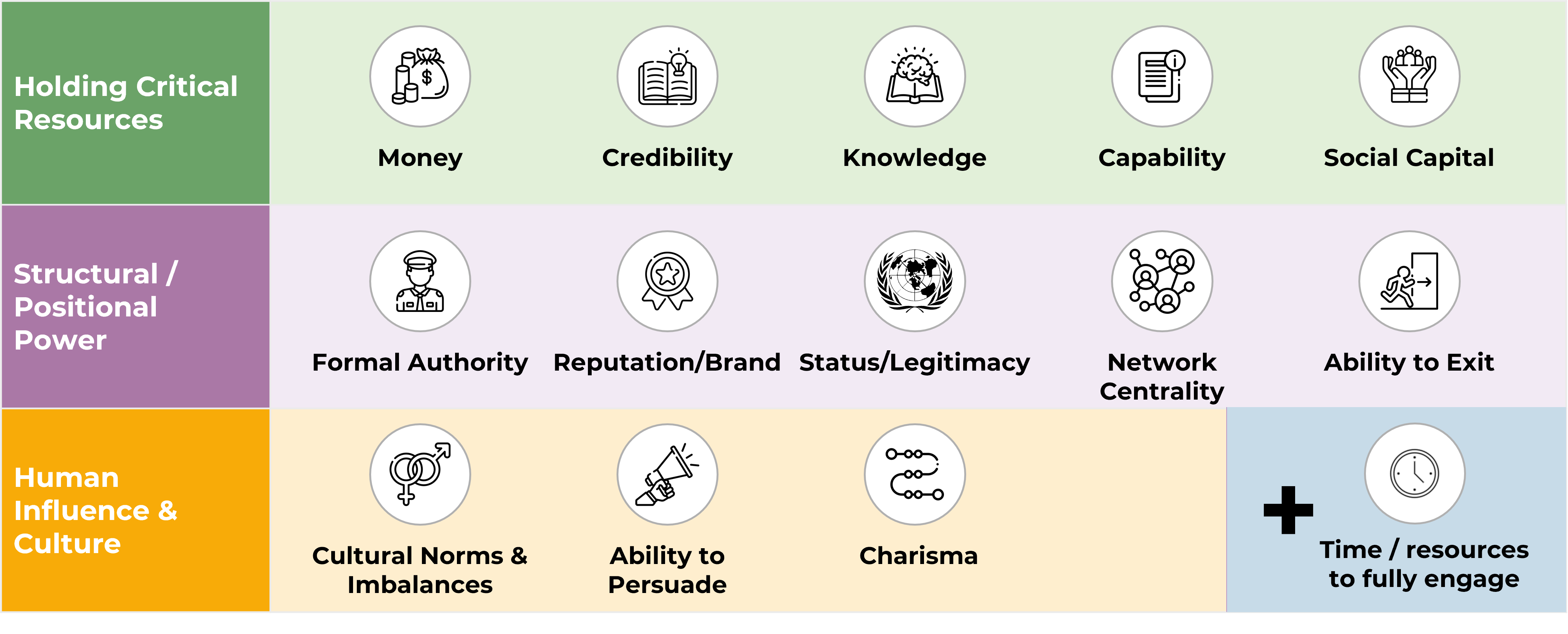
Money is one source of power among many
Transformational change is never delivered by a single organisation, instead, it requires the contribution of every sector: philanthropy to provide the activation energy, governments to put policy in place, investors to provide capital, businesses to develop solutions, and civil society organisations and communities to ensure the outcomes serve those intended to benefit. Each partner brings value to the table – that’s why they belong in the partnership – and each of those contributions constitutes a form of power.
Money is power, just not the only one. Credibility is a source of power, as are the knowledge and capability required to deliver, and the social capital that a community organisation holds in the form of local trust, which no amount of funding can purchase. Power also derives from formal authority, from institutional reputation, and from network centrality, the influence conferred simply by convening a partnership and determining who is invited to it. Power comes from the capacity to persuade, and from resources such as time: the partner able to attend every meeting is heard more consistently than the partner who cannot.
Nobody tells a funder they’re a bad partner. When you control the money, partners smile, nod, and make it work. This power dynamic means honest feedback is rarely relayed, so a critical capability gap goes unaddressed.
How can funders balance the playing field?
In practical terms, this means recognising non-financial contributions as seriously as financial ones. It means resourcing smaller partners adequately, meeting the costs of travel or translation, so that they are able to participate substantively rather than nominally.
None of this is comfortable to confront. Funders may never have considered power dynamics at all, and examining their own power can feel awkward. But recognising and addressing power imbalances is essential to building equitable, transformational partnerships.
Interested in learning more? Check out our recent webinar: Partnership and power.