Transforming the urban climate project preparation ecosystem
Emerging findings on how enhanced collaboration can deliver greater coherence, efficiency and impact
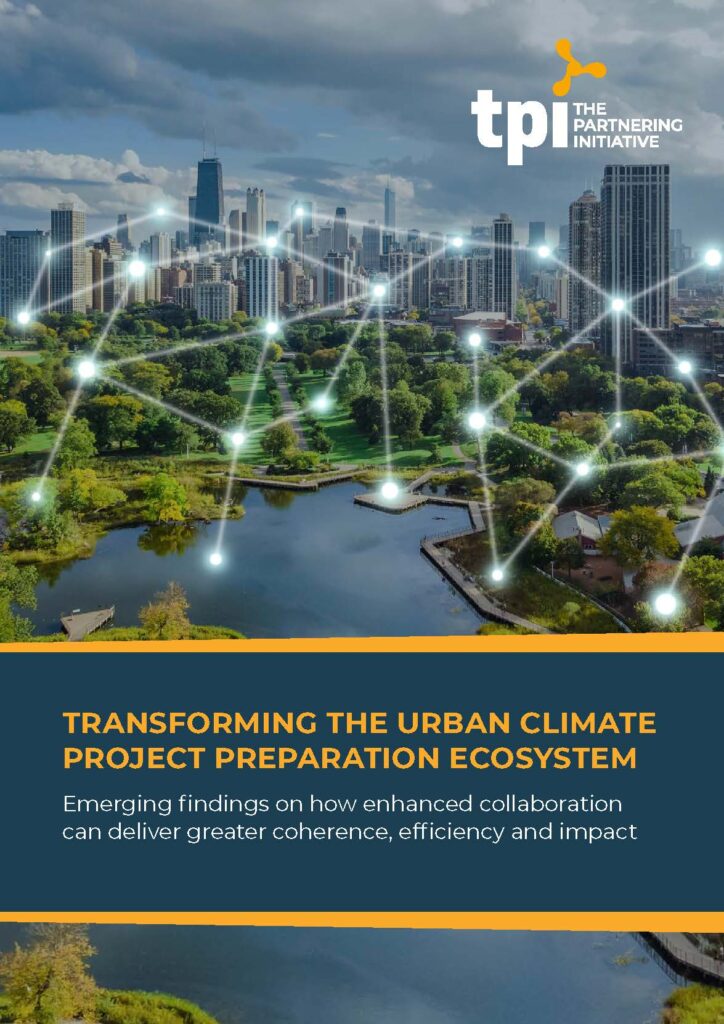
Emerging findings on how enhanced collaboration can deliver greater coherence, efficiency and impact in preparing urban climate projects.
Cities need far more climate finance than currently reaches them, and a whole ecosystem of project preparation facilities, funders and coordination mechanisms has grown up to help turn ideas into investable projects. Yet investors still complain of a shortage of ‘bankable’ projects, and many projects stall part-way through preparation after using up significant resources. This study looks at that ecosystem through the lens of partnership and collaboration, to diagnose where and why projects stall along the financing value chain.
It draws on 20 confidential interviews with project preparation facilities, funders, financiers and other stakeholders, alongside desk research and workshops. It maps how coordination works today, at system level and project level, globally and in particular places, and the essential gatekeeping role national governments play throughout. The findings are presented as emerging rather than definitive.
What it recommends
- Depth over breadth: funders should fund against a small, shared set of outcomes, such as the share of projects reaching financial close, co-finance mobilised and time to handover, rather than deliverables alone.
- Longer horizons: moving from one-to-three-year grants to five-to-seven-year frameworks with common indicators.
- Back the navigator role: ring-fenced budget for handovers, matchmaking and agreements between facilities, with shared credit when a project converts after a handover.
- Bring financiers in early: an “integrated model” where financiers, or at least their specific criteria, shape preparation from the start, so technical work is aligned with real financing instruments.
The report closes with a call for collective action to make the ecosystem more coherent and collaborative, so that more projects reach funding and investment.
What it means for you
Cities and their partners need a shared view of why projects stall, and this report is a starting point for changing how the ecosystem works.
- Funders should measure outcomes such as the share of projects reaching financial close, co-finance mobilised and time to handover, rather than deliverables alone, and move from one-to-three-year grants towards five-to-seven-year frameworks with common indicators.
- Project preparation facilities should ring-fence budget for the navigator role, including handovers and matchmaking between facilities, and agree shared credit when a project converts after a handover.
- Financiers should engage early, so that technical preparation is aligned with the financing instruments that will actually be used.
- National governments play an essential gatekeeping role throughout the process, so involving them from the start is part of the work rather than an add-on.
Written by The Partnering Initiative on behalf of the German Federal Ministry for the Environment, Climate Action, Nature Conservation and Nuclear Safety (BMUKN), through the International Climate Initiative (IKI), 2026.
- TypeResearch
- Published2026