

8,000+
people have taken a TPI training course
99.95%
of participants would recommend their course
20+ years
of drawing out what works in partnering
Your development path
Partnering is a professional practice
Like any profession, effective partnering rests on a body of knowledge, good-practice standards and competencies that can be learned. Our professional development helps you build those competencies, apply them to real partnerships and show what you can do.
1. Assess
See your strengths and where to focus with the free partnering competencies self-assessment.
2. Learn
Build the frameworks, tools and competencies on a TPI course: open, masterclass or tailored to your team.
3. Apply
Use what you have learned on your own partnerships, with coaching and mentoring and peer learning.
4. Show
Gain the Certificate in partnering practice through guided reflection on your own partnering.
The competencies
What makes an effective partnering professional: the MUST framework
Partnering well takes more than goodwill. TPI’s MUST framework sets out the professional partnering competencies that everyone working in partnerships needs, in four areas.
M
Mindset
The attitudes that make someone an effective partner: valuing what others bring, co-creating, sharing decision-making, checking your own assumptions, and coping with complexity and uncertainty.
U
Understanding of other sectors
Knowing the culture and language, interests and drivers, resources and constraints of the sectors you partner with, and the challenges you might face working with each.
S
Skills for relationships
Empathy and active listening, communicating across cultures, building trust, negotiating around underlying interests, dealing with power imbalances and handling difficult conversations.
T
Technical partnering knowledge
How partnerships work: the partnering process, choosing the right type of partnership, creating value, agreements, set-up and governance, review and evaluation, and moving on.
Partnership brokers, who support others to partner, also need further competencies: context and stakeholder analysis, designing partnership-building processes, facilitation, managing negotiation and difficult conversations between partners, health checking, and maintaining neutrality in their own role.
Free · about 15 minutes
How do you measure up?
The partnering competencies self-assessment takes you through each area of the MUST framework, and brokering if it applies to you. You get your competency profile, development priorities and suggested resources, and can retake it to track your progress.
Training
The science and the art of partnering
Our courses cover the technical side of partnering, from the building blocks of an effective partnership to negotiation and review, and the human side: relationships, trust and power. Sessions are highly interactive, with serious games, peer exchange and case clinics.
Every course gives you:
- A shared language and clear frameworks for multi-stakeholder partnering, drawing on the SDG Partnership Guidebook, developed with the UN
- Practical tools you can use straight away, from partnering agreements to health checks
- Stronger competencies across the MUST framework, from mindset to technical knowledge
- Confidence from practising in a safe space before you need it for real
- Peers from other organisations and sectors facing the same challenges
This course translates the tacit into the tangible. Everyone assumes they know how to manage partnerships—or that it’s easy. What it actually does is show you how to do it well, step by step, and how to intentionally plan for outcomes rather than leave them to chance.
Partnering for impact participant, 2025
Partnering for impact
Our open online course for new practitioners and for experienced ones who want to formalise what they know: five live seminars in one week.
Philanthropy Masterclass
Immersive training for leaders and changemakers in philanthropy, in person or online, to catalyse multi-sector partnerships.
Tailored training
Courses designed around your organisation’s context and partnerships, from essential skills to negotiation and training of trainers.
In their words
Hear from our course participants
Apply what you learn
Coaching and mentoring
Partnering competencies grow fastest when learning is applied to real situations. Training gives you frameworks and tools; coaching and mentoring help you use them on the partnerships in front of you, with one-to-one support from experienced partnership practitioners. It can follow a TPI course or stand alone.
- Think through a partnership you are scoping, negotiating or managing, with someone who has seen many before
- Prepare for difficult conversations, negotiations or key partner meetings
- Work through challenges such as power imbalances, stalled progress or tensions between partners
- Grow as a partnership broker, supporting others to partner
Learn alongside peers
Communities of practice
A regular, trusted space where practitioners facing the same challenges share what is working, solve problems together and keep building their competencies long after a course ends. We facilitate them within organisations, across sectors and across networks.
Show what you can do
Certificate in partnering practice
A standards-based certificate for anyone who has taken a TPI course, or equivalent training, and wants to go further. It deepens your learning through an extra stage of reflective work, gives you direct feedback on your own partnering, and shows others that you have reached a recognised level of knowledge of partnering standards and competence in multi-sector partnering.
Two ways to complete it
- Reflective essay: apply the course’s concepts, competencies and frameworks to your own partnership, analysing its challenges and strengths, your role in it and the good practice that could help
- Partnership plan: analyse an existing or prospective partnership and set out how to take it forward
How it works
- Register when you book a course, or afterwards
- Send us an outline within one month, so we can check it will show enough knowledge
- Submit your assignment within six months, with our support and advice along the way
- TPI experts assess it, and award the Certificate when it reaches the required level
Next open course
Partnering for impact
- 8 to 12 March 2027
- Five mornings, 9:00 to 11:30 UK time, live on Zoom
- £800 for NGOs, government, the UN and social enterprises
- £1,200 for companies
The resources were excellent and will continue to be central to my partnerships long after the course has finished.
Course participant
The course covered a huge amount and taught me a lot about partnership structures that I haven’t found anywhere else!
Course participant
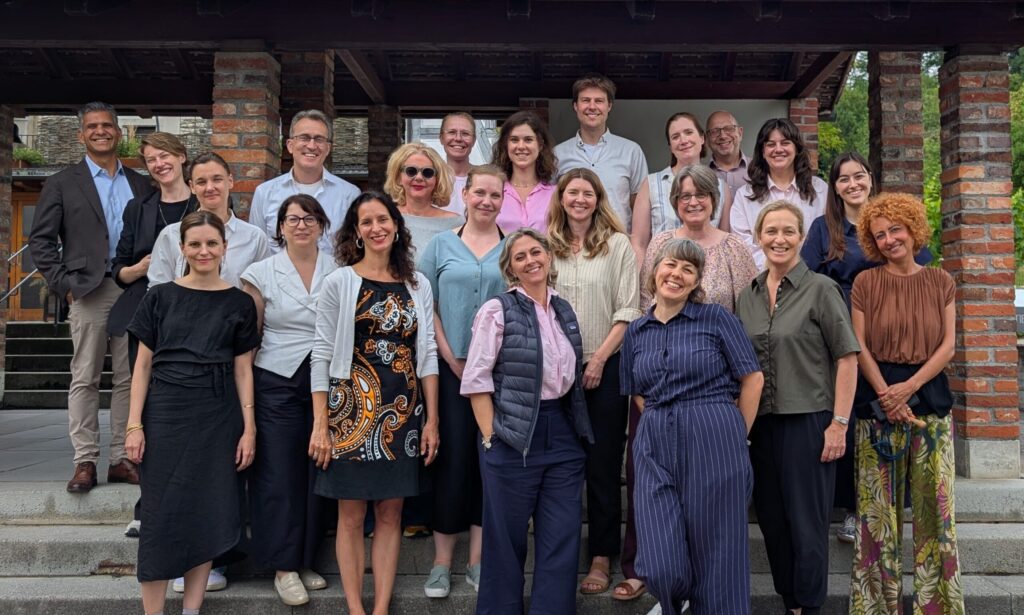
Who you’ll learn with
Experienced practitioners, and a room full of peers
Our courses are led by TPI’s trainers and our global network of Associates. You’ll learn as much from the people around you as from the frameworks.

Melissa Porteous
Director of Training

Darian Stibbe
Executive Director

Sarita Sehgal
Associate Director, Strategy and Development

Ruth Findlay Brooks
Associate Director of Research and Learning

Dave Prescott
Creative Director
Planning a partnership, or stuck in one?
Tell us what you are trying to achieve. We will point you to the right course, tool or support.