Jamaica partnership landscape assessment
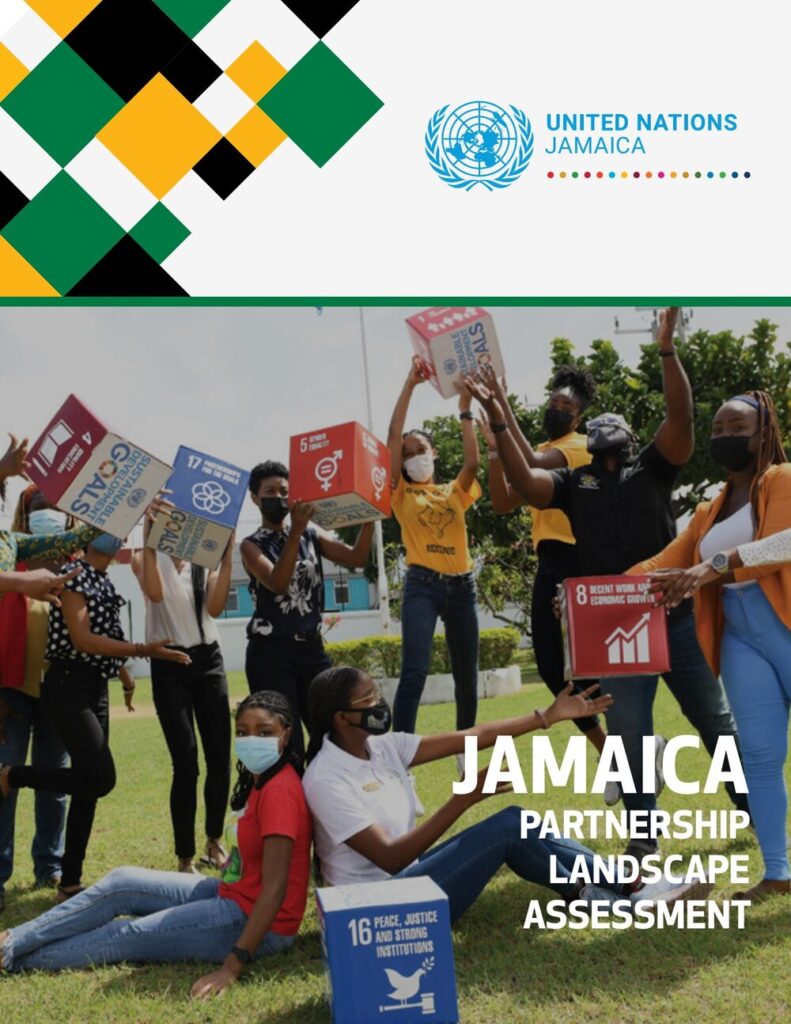
Maps partnerships for development in Jamaica. It finds that strong technical partnerships must be matched by better access to development finance, a particular challenge for an upper-middle-income country, and recommends ways to strengthen how the UN system and its partners work together.
Partnerships are only as strong as the system around them. This assessment shows where Jamaica’s partnerships for development are strong, where they are held back, and where new or deeper partnerships could make the biggest difference. It was prepared with the 2030 Agenda Partnership Accelerator and draws on consultations with partners across government, the UN system, civil society and the private sector, which together form a practical roadmap for stronger collaboration.
What it found
- Jamaica’s partnerships work both vertically, with international partners, and horizontally among local organisations, and they are not confined to any one type of activity or resource.
- Strong technical partnerships need to be matched by better access to development finance. Jamaica’s classification as an upper-middle-income country makes that finance harder to secure, so the country needs to find alternative and innovative sources of finance.
- Partners see complicated UN policies and procedures as a barrier to deepening collaboration, particularly in forming partnerships with the private sector.
- Many civil society organisations lack the institutional capacity to write proposals, manage grant funds, and monitor and evaluate their work, which limits their ability to take part in partnership opportunities.
- The national statistics system needs strengthening so that it can provide the timely, accurate data needed to plan development and track progress.
What it recommends
For the UN in Jamaica, the assessment recommends revising policies and procedures to make them more flexible, making partnerships with government more strategic through the Joint National Steering Committee for the Multi-Country Sustainable Development Cooperation Framework, and strengthening the UN’s role in building coalitions with civil society, workers and employers’ groups, business, local authorities and young people. It also calls for greater support to build the capacity of civil society organisations, including through courses with the University of the West Indies and community colleges, and for the UN to work with the Planning Institute of Jamaica and the Statistical Institute of Jamaica to strengthen the data that underpins partnership and planning.
What it means for you
- For UN agencies in Jamaica, simpler and more flexible procedures would make it easier to partner with the private sector and civil society, and more strategic engagement with government would help align partnerships with national plans.
- For the Government of Jamaica, a stronger Joint National Steering Committee would help oversee the framework, and investment in national data would make partnerships easier to plan and track.
- For civil society organisations, strengthening capacity in proposal writing, grant management and monitoring would widen access to partnership opportunities, and courses with universities and colleges are one route to get there.
- For private sector organisations, the assessment shows the UN system is looking for more flexible ways to partner, so it is worth raising with UN partners where collaboration could add value.
- For funders and financing partners, finance is the main constraint, so alternative and innovative sources of finance are where new partnerships could make the biggest difference.
Published by the United Nations, 2023.
- TypeResearch
- Published byUnited Nations
- Published2023
- Programme2030 Agenda Partnership Accelerator