
Global Development Goals: partnerships for progress
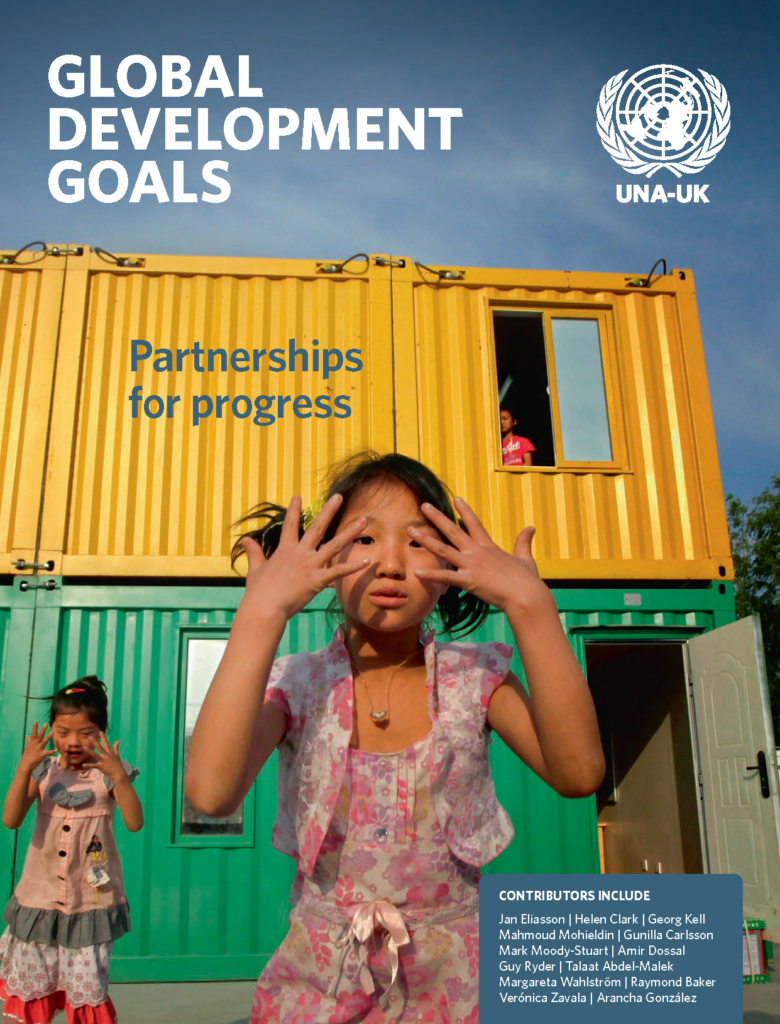
Darian Stibbe’s contribution to the UN publication Global development goals: partnerships for progress, arguing that collaboration is the new normal and asking how barriers can be broken down to enable effective, concerted action on the goals.
Partnership is widely endorsed, but the reality, particularly at country level, is still lukewarm. This chapter by Darian Stibbe, written for the UN publication Global development goals: partnerships for progress, argues that collaboration is the new normal and asks how the barriers can be broken down so that partners can act together effectively.
What it argues
Partnerships across sectors, with different interests, motivations, cultures and timescales, are often lacking in trust, which makes them hard to build. The chapter argues that collective action is needed at four levels. These include systemic mechanisms, such as multi-stakeholder platforms that catalyse partnerships across sectors, and organisations becoming fit for partnering, because most organisations are rarely set up to partner effectively.
What it means for you
- Governments and development agencies should invest in platforms that bring sectors together, because they are the systematic way to build partnerships rather than relying on chance.
- Organisations should examine their own readiness to partner, including the operational and administrative obstacles that stop partnerships from working.
- Anyone setting partnership targets should measure partnerships as well as the activities they support, because what gets measured gets done.
Darian Stibbe’s contribution to Global development goals: partnerships for progress, 2014.
- TypePolicy
- Published2014
- ProgrammePlatforms and policy
