Fit for Partnering: becoming a partner of choice
World Vision’s journey to becoming institutionally fit for partnering
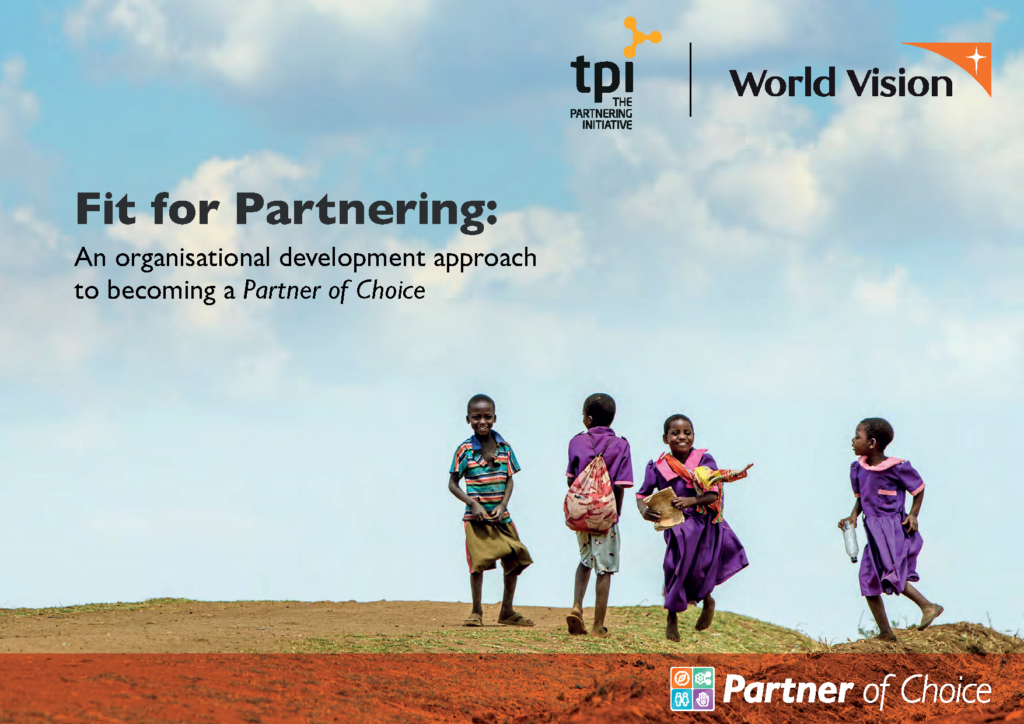
World Vision and TPI share their experience of building the institutional capacity to partner within World Vision’s national offices.
World Vision wants to be a partner of choice: the organisation people choose to work with because of how it partners. This learning review, written by The Partnering Initiative, looks at how World Vision’s national offices have built the institutional capacity to partner, and what that has meant for their partnerships and for the communities they serve.
What it covers
The review shares stories of change from participating World Vision country offices, and explains how internal changes and stronger capabilities have helped them manage their partnerships and achieve their objectives. It was written after the first wave of the collective response to Covid-19 had shown what all-of-society collaboration can achieve when motivation and interests are aligned, and it asks how that momentum can be sustained.
What it means for you
- NGOs that want to be partners of choice should build the internal capacity to partner, including clear strategy, systems and staff time, rather than relying on individual champions.
- Country offices and programme teams should invest in professional partnering competencies, because the review shows that stronger capabilities directly improve how partnerships are managed.
- Leaders can use the examples in the review to show what fit-for-partnering change looks like in practice, and to build support for it across the organisation.
- Partners and funders working with World Vision can expect a more deliberate approach to partnering, which makes it easier to agree objectives and deliver them together.
Learning review written by The Partnering Initiative, October 2019.
- TypeResearch
- Published2019