Better together
Unleashing the power of the private sector to tackle non-communicable diseases
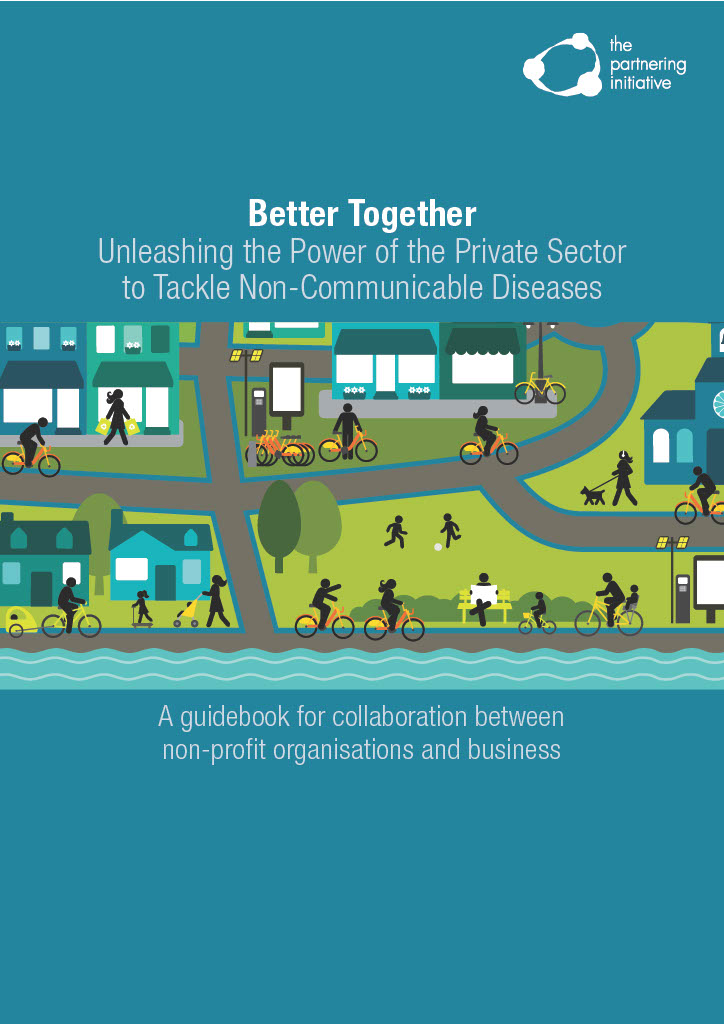
Developed with Bupa and UICC for non-profit organisations that want to partner with companies against non-communicable diseases, including twelve practical tools.
Non-communicable diseases such as heart disease, cancer, diabetes and chronic respiratory illness are getting worse, and tackling them needs an all-of-society approach. This guidebook, developed with Bupa and UICC, helps non-profit organisations partner effectively with companies against these diseases, which is often challenging but can be very worthwhile.
What it covers
The guidebook starts by explaining that the private sector is not a single entity and that its activities affect non-communicable diseases in complex ways, both through the products and services companies offer and through the way they operate. It then explains how to understand a company’s incentives and who influences decisions within it, and sets out how non-profits can approach partnering with business. It includes twelve practical tools.
What it means for you
- Non-profit leaders should understand that companies vary widely, and that a company’s incentives and influencers need to be understood before a partnership is proposed.
- Non-profit teams should build professional partnering competencies, including understanding how business thinks, so they can engage companies on terms that work for both sides.
- Companies considering a partnership on non-communicable diseases can use the guidance to see where they can contribute positively, and what a responsible partnership looks like.
- Anyone working on the twelve tools will find practical help for each stage of the partnership, from first conversations through to delivery.
Developed with Bupa and UICC, 2017.
- TypeGuidebook
- Published2017